A kitchenware supply contract protects you in three situations: when the sample is approved but the bulk goods do not match it, when a supplier disappears with your deposit, and when a design you paid to develop shows up in a competitor’s catalog. Most importers sign whatever the factory sends because they want the production slot, not the paperwork. That is a mistake you can fix before the first PO — the clauses below take an afternoon to negotiate and they define who absorbs the cost of every problem that happens after the container ships.
Why the Contract, Not the Sample, Is Your Real Specification
New importers usually believe the approved sample is the specification. In practice the sample is only evidence. The contract is the document that says what happens when the factory produces 10,000 pieces that differ from the sample in a way that passes a casual glance and fails your customer’s shelf test — thinner coating, a slightly different steel grade, a handle that wobbles after ten dishwasher cycles.
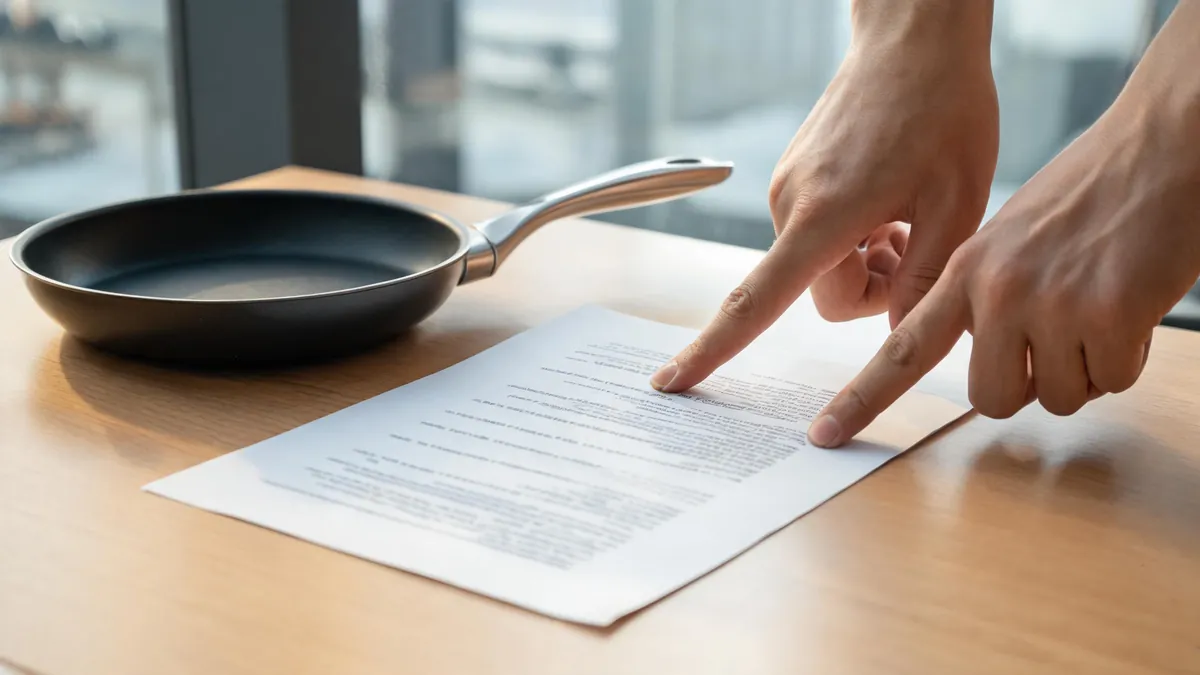
Sample approval and contract signature should happen in the same week, and the contract should attach the sample approval record, the product drawing, the material specification and the packaging specification as annexes. If a clause refers to “the agreed specification” without defining what that specification is, the clause is empty. Our buyers are advised to attach a one-page spec sheet to every contract; most of the kitchenware products we source follow this pattern, and it is the reason factory disputes rarely reach a lawyer.
Think about the conversation you will have six months from now. The factory will say “the sample was hand-finished, bulk is machine-finished, that is normal.” You will say “the sample and the spec sheet both say mirror polish.” Whoever wrote the contract wins that conversation. That is the entire purpose of this document.
The Commercial Clauses That Matter Most
Supply contracts differ by product line, but the commercial core is remarkably consistent across cookware, bakeware and tableware. Use this table as your review checklist when the factory sends its standard agreement:
| Clause | What it should cover | What goes wrong without it |
|---|---|---|
| Deposit and payment schedule | Deposit percentage, balance trigger (inspection report vs shipment), payment method, account details of the contract entity only | Balance due before inspection; payments to a changed account; deposit used as working capital with no leverage |
| Specification and annexes | Product drawing, material grades, coating system, dimensions and tolerances, packaging spec, approved sample reference | Endless argument over “what was agreed”; grade substitution without a paper trail |
| Inspection and approval milestones | Pre-production sample, inline inspection window, final random inspection, AQL level, who may attend | Factory ships before you see bulk; you discover defects after payment or after arrival |
| Defect definition and remedies | Major vs minor defect classes, reject/rework threshold, replacement or refund mechanics, claim window | Factory claims “minor” on what your retailer calls “unacceptable”; no remedy path defined |
| Tooling and mold ownership | Tooling payment schedule, ownership transfer point, mold release, drawing custody, removal rights on termination | You pay for molds you never own; switching suppliers means paying twice |
| Intellectual property | Who owns new designs, confidentiality of your brand and trade data, restriction on reselling your design | Your private-label design appears in another buyer’s program or on the factory’s own catalog |
| Exclusivity and territory | Scope of exclusivity, term, minimum purchase commitment that keeps exclusivity alive | An unenforceable promise of “we will not sell to your competitors” with no definition of either |
| Delivery and delay | Incoterm, delivery date window, delay notification duty, penalty or cancellation right for late shipment | A two-month late shipment that misses your retail season with no recourse |
| Force majeure | Definition of events, notice period, what happens to deposits and tooling when events occur | Factory invokes “unforeseen circumstances” for ordinary production problems |
| Governing law and dispute resolution | Law, forum, arbitration or courts, language of the agreement | A dispute that can only be resolved in a forum where your contract is unenforceable |
| Termination and transition | Termination triggers, notice, handover of drawings and tooling, final payment obligations | You cannot leave a failing supplier without abandoning your molds and designs |
You do not need every clause to be heavily negotiated on a first order. You need them to exist, to be readable, and to match the commercial reality you already agreed by email. When the factory’s standard contract contradicts your email trail — a different deposit, a different MOQ, a different balance trigger — the written contract wins unless you correct it before signing.
AQL, Defect Classes and the Language of “Acceptable Quality”
The single most common contract gap in kitchenware sourcing is the absence of an agreed quality level. A contract that says “goods shall be of good quality” is a contract about nothing. Your factory and your customer have different definitions of good. AQL — acceptable quality limit — is the tool that makes the definition shared.
Most kitchenware importers work with a general inspection level II and AQL 2.5 for major defects and 4.0 for minor defects, using the ISO 2859 sampling standard that third-party inspection companies use. You should confirm these numbers with your inspector or supplier for your product category, because defect definitions matter more than the AQL number itself. A defect class list that names examples — for cookware: coating peeling, base warping, handle wobble, sharp edges; for bakeware: coating defects, uneven rims, dimensional deviation beyond tolerance; for tableware: chips, cracks, glaze defects, color mismatch — turns a statistical abstraction into a practical tool that your QC staff and the factory’s QC staff can both apply.
Write down what happens at each threshold. If major defects exceed the AQL, the standard remedy is rejection of the lot, with the factory responsible for rework or replacement and the buyer entitled to cancel or claim damages for the delay. If minor defects exceed the limit, the buyer typically accepts the lot with a negotiated allowance or requires sorting at the factory’s cost. Some contracts add a “cap and replace” mechanism: the factory replaces defective units within a defined percentage of the order at no cost, and beyond that percentage the whole lot is rejected. Decide which model fits your product and your retail customer’s tolerance, then write it down.
Two practical notes. First, tie the inspection right to a window, not to a vague promise: “buyer or buyer’s representative may attend final inspection three working days before the agreed shipment date” is enforceable; “buyer may inspect before shipment” invites the factory to ship early. Second, make the claim window realistic for your channel. A retail importer needs 14 to 30 days after arrival to open cartons and check; a contract that requires claims within 7 days of loading makes your own warehouse the last quality gate, which is where you do not want to be the inspector.
Quick answer: can I rely on a third-party inspection report instead of writing AQL into the contract?
Use both. The inspection report is evidence at a point in time; the contract is the remedy when the report is not available, is disputed, or when defects appear after the report. A clause that names the inspection company and the AQL level makes the report binding on both parties, which is stronger than a report that exists outside the contract.
Tooling and Mold Ownership: The Clause Importers Forget Until They Switch
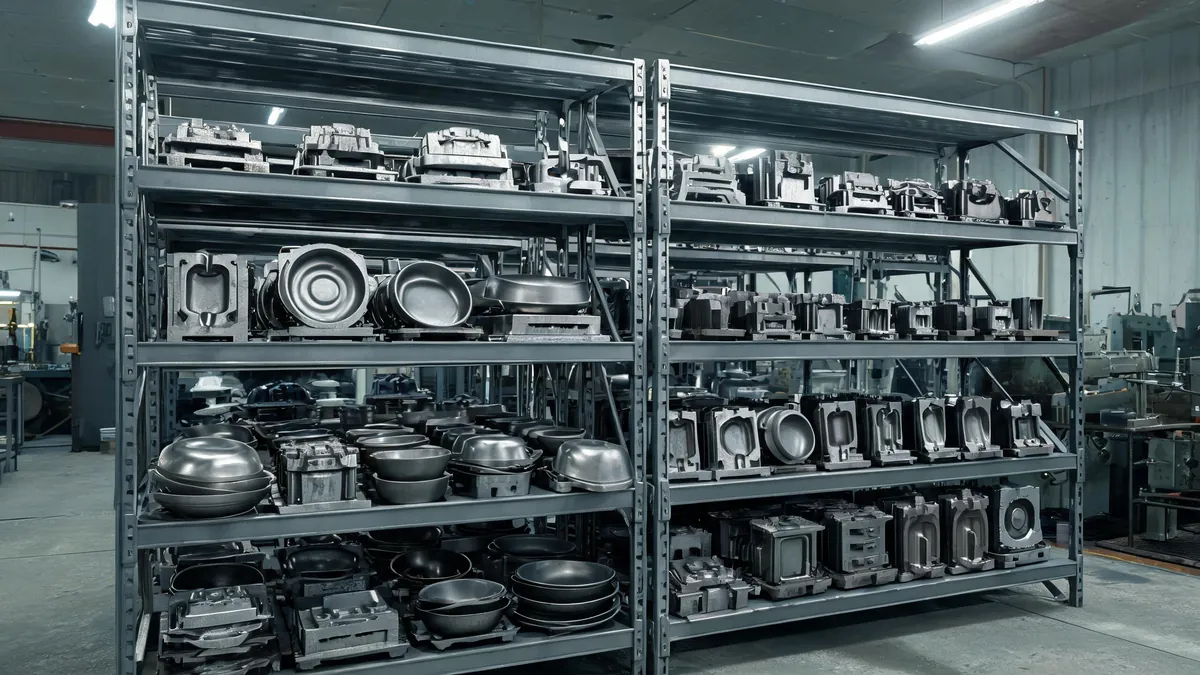
For OEM kitchenware, tooling is often the largest single upfront cost after the deposit, and it is the asset most likely to be lost when a relationship ends. Mold ownership is a legal question with a physical answer: whoever holds the molds and the drawings controls the next order. Your contract should make the answer unambiguous.
The standard structure that protects buyers: tooling cost is quoted separately from unit price; tooling payment is made in full before production starts; ownership transfers to the buyer upon full tooling payment; the factory keeps the molds for production only while orders are active; on termination or request, the factory must release the molds and provide access for removal or transfer; and the buyer holds a copy of the mold drawings and the tooling register from day one. If the factory refuses a mold-release clause because “no customer has ever asked,” that is a signal about how they will treat the asset at the end of the relationship, not the beginning.
Where the factory developed the mold on its own and you are buying only the finished goods, ownership stays with the factory — that is standard for catalog-item OEM. The line you must draw is between tooling you paid for and tooling you did not. Keep the invoice for tooling separate from the goods invoice so there is no ambiguity about what was paid and when. Our experience with cookware products and bakeware lines is that factories respond well to a clear tooling clause; the ones that resist are usually the ones with the most to lose from it.
IP Protection for Private-Label Buyers
When you order a private-label kitchenware line, you are usually combining three layers of intellectual property: the factory’s existing design adapted for you, your brand and packaging, and possibly your own new design. The contract should sort these layers so each party knows what they own.
For your brand and packaging — logo, artwork, color system, carton design — the clause should state that these are your property, that the factory may use them only to produce your order, and that the factory will not register your brand or sell your branded packaging to others. For your new designs — a shape you developed, a coating specification you commissioned, a handle you designed — the clause should state who owns the design and whether the factory may offer it to other buyers after a defined exclusivity period. For the factory’s catalog designs, the clause should state that you receive a license to sell them under your brand, not ownership of the underlying design.
Confidentiality deserves its own section, not a paragraph buried in boilerplate. The factory will see your retail prices, your customer names, your order volumes and your launch calendar. A confidentiality clause that covers “all commercial and technical information disclosed during the relationship” and survives termination for a defined period (two to three years is common) costs nothing to include and gives you a legal hook if your data appears in a competitor’s program.
Be realistic about enforcement. A kitchenware factory in a distant jurisdiction is rarely worth suing over a copied design; the value of the IP clause is mostly in negotiation and in the paper trail it creates. The clause gives you the right to stop production and cancel the order when you discover unauthorized use, and that right — exercised fast, with evidence — is what actually deters the behavior. If you are buying from a supplier or trading company rather than the factory that produces the goods, check who owns the designs in that chain before you sign; our guide on kitchenware supplier vs trading company explains the risk layers.
Exclusivity and Territory: Writing It So It Works
Many importers ask for exclusivity in casual emails and receive a casual “yes” that means nothing. An exclusivity clause only works when three things are defined: the product scope, the territory, and the commitment that keeps it alive.
Product scope should name the specific SKUs or the specific design, not “all kitchenware.” Territory should name countries or regions. Commitment should say what you must buy to keep exclusivity — for example, a minimum annual order volume per SKU, reviewed every twelve months. Without the commitment, a court (or a factory) will treat exclusivity as a favor, not a right, and the factory will feel entitled to sell the same design elsewhere the moment your orders slow.
If exclusivity matters to your retail proposition — because you are asking a retailer to stock a design only you carry — the clause is worth negotiating even when it costs you a slightly higher unit price. If exclusivity is just a nice-to-have, consider skipping it and paying for what you actually need: a defined period where the factory will not produce your *new* designs for others, which is narrower, cheaper and easier to enforce.
Deposit, Payment and the Account Rule
Payment terms are where most kitchenware sourcing losses actually happen, and the contract is the control. The industry-normal structure for OEM cookware and bakeware is a 30 percent deposit with the balance against inspection or before shipment, depending on your leverage. Whatever number you negotiate, the contract should tie the balance to a verifiable event — third-party inspection report, your QC sign-off, or loading documents — rather than to a calendar date alone.
The account rule is simple and non-negotiable: all payments go to the bank account of the contract entity, named in the contract, in the contract’s currency. If the account changes after signing, require a signed amendment and verify the change with the factory by a second channel — a phone call to a number you already have, not the number in the email that announced the change. Deposit fraud in kitchenware almost always follows the same script: a legitimate first order, then a “we changed banks” email before the second payment. The account clause and your verification habit are what break that script.
Also write down who pays for what. Tooling, samples, courier, packaging artwork, palletization, inspection fees, and the cost of your QC visit are all small amounts that generate large misunderstandings when they are not allocated. A short “costs” clause that assigns each item is worth more than a discount negotiation, because it removes the surprise line items that arrive after the invoice.
Delay, Force Majeure and Dispute Resolution
Late shipment is the most common kitchenware failure that is not a quality failure. The contract should define the delivery date with a tolerance — “shipment by [date] or within 7 days thereafter” — and give you a remedy when the date is missed: a right to cancel or to claim the difference if you must air-freight or buy replacement stock. Factories rarely accept open-ended penalty clauses; a realistic structure is a written delay-notification duty plus a cancellation right after a defined number of days late, with the deposit refundable or transferable to a new production slot.
Force majeure clauses matter more than importers think, because they are the factory’s first defense in any dispute. A clause that lists “government actions, natural disasters, epidemics, raw material shortages” gives the factory broad excuses. Narrow the list to genuinely unforeseeable events, require written notice within a short window, and state what happens to deposits and tooling when the event occurs — most reasonable factories will agree that deposits roll to the next slot and tooling stays yours.
Dispute resolution should name a forum you can actually use. For most importers buying from China, that means arbitration under a recognized set of rules — CIETAC is common — rather than litigation in a local court. The clause should also name the language of the agreement; if the contract is bilingual, state which version governs on conflict. Your goal is not to plan for a lawsuit; it is to make the cost of resolving a dispute low enough that the factory prefers to honor the contract.
A Contract Review Workflow You Can Use on Every Order
You do not need a lawyer to review a kitchenware supply contract on a first order, but you do need a workflow that catches the common failure points. This sequence takes a few hours and can be reused for every supplier you onboard:
- Request the factory’s standard contract when you request samples, not after you approve them. A factory that has no written contract is a factory that has never handled a dispute.
- Compare the contract against your email trail: deposit, balance trigger, MOQ, delivery window, sample approval. Every contradiction is a negotiation point, not a detail.
- Check that the annexes exist: product drawing, material spec, packaging spec, approved sample reference. If they are missing, ask for them before signing.
- Confirm the AQL and defect-class language matches the product category you are buying, and that inspection windows are concrete dates, not promises.
- Verify the tooling and IP clauses match who actually paid for the tools and who owns the designs.
- Confirm the account rule and the costs allocation are in writing.
- Sign and file the contract, the annexes and the sample approval record in one folder with the supplier’s license and export documents. If you ever need them, they must be in one place, not scattered across inboxes.
- Review the contract again before any significant change — new categories, new designs, larger order sizes, a second year of exclusivity. The contract that fit your first 500-piece order may not fit your first container.
This workflow is the same discipline that appears in supplier evaluation generally. A contract review is one part of a wider picture that includes capacity, quality history and financial stability; our kitchenware supplier evaluation scorecard shows where the contract sits in the overall decision.
When to Sign Fast and When to Walk Away
Contracts are negotiation documents, not obstacles. Some suppliers send a tight, professional contract with sensible clauses — sign those quickly, because they signal a factory that has handled export orders professionally. Others send a one-page order confirmation with no quality, tooling or IP language. For those, your redline is the first test of how the relationship will work.
Walk away — or at least do not send a deposit — when the factory refuses to put the approved sample in writing, when it will not name an inspection window, when it insists that all disputes go to a forum you cannot practically use, or when it demands payment to an account that does not match the contract entity. None of these refusals makes the factory a fraud; any of them makes the relationship structurally unsafe for the amount of money a container of kitchenware represents.
The best contracts are boring. They confirm what both sides already agreed, they attach the documents that define the goods, and they allocate the risk of the problems that actually happen in kitchenware importing: sample-to-bulk drift, coating and finish disputes, late shipments, tooling arguments and payment surprises. If your contract does those five jobs, you can sign it with confidence and spend your energy on the parts of sourcing that grow your business — assortment, pricing and sell-through — instead of on dispute management.
Frequently Asked Questions
Do I need a lawyer to review a kitchenware supply contract?
For a first order under a few thousand dollars, usually not — a structured checklist against the clauses in this article catches the common risks. For large orders, custom tooling, or exclusivity arrangements, a lawyer familiar with cross-border trade is worth the cost, because the money at stake justifies the review.
What if the factory only sends an order confirmation, not a full contract?
Ask for the missing commercial clauses in writing, even as an addendum to the order confirmation. The document does not need to be elegant; it needs to cover specification, inspection, tooling, IP, payment and remedies. If the factory refuses to put those in writing, that refusal is information about the relationship.
Which governing law should I choose?
For most importers buying from China, arbitration under a recognized set of rules such as CIETAC is more practical than litigation in a local court, and it keeps the dispute in a forum both sides can use. Confirm the clause with someone who has experience in your product category and jurisdiction.
Can I enforce mold ownership if the factory keeps my tools after termination?
Only with a written clause that transfers ownership on full tooling payment, gives you removal rights, and requires the factory to release the molds and drawings on request. Without the clause, the molds stay with the factory regardless of who paid for them. Keep a copy of the drawings and the tooling invoice as evidence.
How often should I update the contract?
Review it before any material change: a new product category, a new design, a larger order size, an exclusivity renewal, or a change in the factory’s ownership. The contract that worked for your pilot order may leave you exposed once your order volume and custom content grow.
If you are about to sign with a new kitchenware factory and want a second pair of eyes on the contract and the annexes, send us the document and your product specification. Our team works daily with cookware, bakeware and tableware factories and can tell you which clauses are standard, which need redlining, and what to ask for before you send a deposit. Request a contract review or a quote for your product line.